Walking and running are two of the simplest ways to build more movement into everyday life. Both require familiar movement patterns, both can improve cardiovascular fitness, and both can be done outdoors or on a treadmill.
So which is better?
The short answer is: the better choice is the one that matches your fitness level, goals and routine well enough that you can do it consistently.
Brisk walking is generally considered moderate intensity aerobic activity, while jogging and running are usually vigorous intensity activities. Current physical activity guidance for adults recommends at least 150 minutes of moderate intensity activity a week, 75 minutes of vigorous activity, or an equivalent combination, alongside muscle strengthening work.
That means both walking and running can belong in a healthy fitness routine. The difference is how they fit into your day.
Why Walking Is More Powerful Than It Looks
Walking is often underestimated because it feels simple.
But simplicity can be one of its biggest advantages. Walking is accessible to many fitness levels, requires little preparation and is easier to repeat regularly than many higher intensity workouts.
A brisk walk can raise your heart rate while still allowing you to control the pace. It can be used as a full cardio session, an active recovery day or simply a way to add more movement between longer periods of sitting.
For beginners, walking can also provide a practical starting point before progressing to jogging or running.
The CDC uses brisk walking as an example of moderate intensity aerobic activity and notes that physical activity does not need to be completed all at once; it can be spread throughout the week or divided into smaller periods.
This makes walking particularly useful for everyday fitness. A 20 or 30 minute walk is often easier to fit into a busy schedule than a workout that requires significant preparation or recovery.
When Running Makes More Sense
Running increases exercise intensity.
Because it is generally classified as vigorous activity, it can help you accumulate a higher intensity cardiovascular workload in less time. Current guidelines use 75 minutes of vigorous activity such as jogging or running as an alternative to 150 minutes of moderate activity each week.
For someone who already has a fitness base, enjoys running and wants a more demanding cardio session, this can make running an efficient choice.
Running can also be easy to progress. You can change pace, duration or incline and alternate harder sessions with easier ones.
However, a more intense workout is not automatically a better workout.
If running leaves you so tired or uncomfortable that you avoid the next several sessions, walking may be more useful for your overall routine. Consistency matters more than choosing the hardest possible option.
Walking vs Running: Which Burns More Energy?
Running generally requires more energy per minute because the exercise is performed at a higher intensity.
But everyday fitness is not only about what happens during one minute of exercise.
Duration, frequency and consistency all influence the total amount of activity you complete. Someone who comfortably walks for 45 minutes several times a week may accumulate more useful activity than someone who plans to run but rarely does it.
Rather than asking which activity is “best” for burning calories, a more practical question is:
Which one can you perform regularly while still recovering well enough to keep going?
For some people, the answer is running. For others, it is walking. Many people benefit from using both.
Does Walking Count as Cardio?
Yes.
Cardio is not defined by running. The important factor is whether the activity raises your heart rate and breathing enough to reach an appropriate intensity for you.
Brisk walking is specifically recognized in public health guidance as moderate intensity aerobic activity.
You can also make a walking session more challenging without turning it into a run.
Increasing pace is one option. Adding incline is another.
On a treadmill, incline walking can change the intensity while allowing you to maintain a walking pattern. This is one reason treadmills can be useful beyond running: the same machine can support easy walking, brisk walking, incline work, jogging and running.
PrimaFit’s current treadmill range is organized around different levels of use, from models intended for daily walking and light running to more advanced and professional treadmills.
Do You Have to Choose One?
No.
Walking and running can work particularly well together.
You might walk on lower energy days and run when you feel ready for more intensity. Beginners can use walking intervals between short periods of jogging. More experienced runners may use easy walking as part of warm ups, cool downs or lighter recovery days.
This approach makes cardio less all or nothing.
A weekly routine could combine brisk walking on busy days, one or two running sessions, incline walking when you want more intensity without running, easy walking on recovery days, and strength training alongside cardio.
The goal is not to turn every session into a test. It is to create enough variety that regular movement becomes easier to maintain.
Walking or Running on a Treadmill?
Both outdoor and treadmill training can be useful. The better option often depends on convenience and preference.
A treadmill gives you direct control over speed, incline and session length. It also allows walking or running to continue when weather, traffic or time make outdoor exercise less practical.
PrimaFit’s treadmill collection includes options for walking, running, home use and professional environments. The current range includes models from international fitness brands and is selected across different performance levels, from everyday movement to frequent professional use.
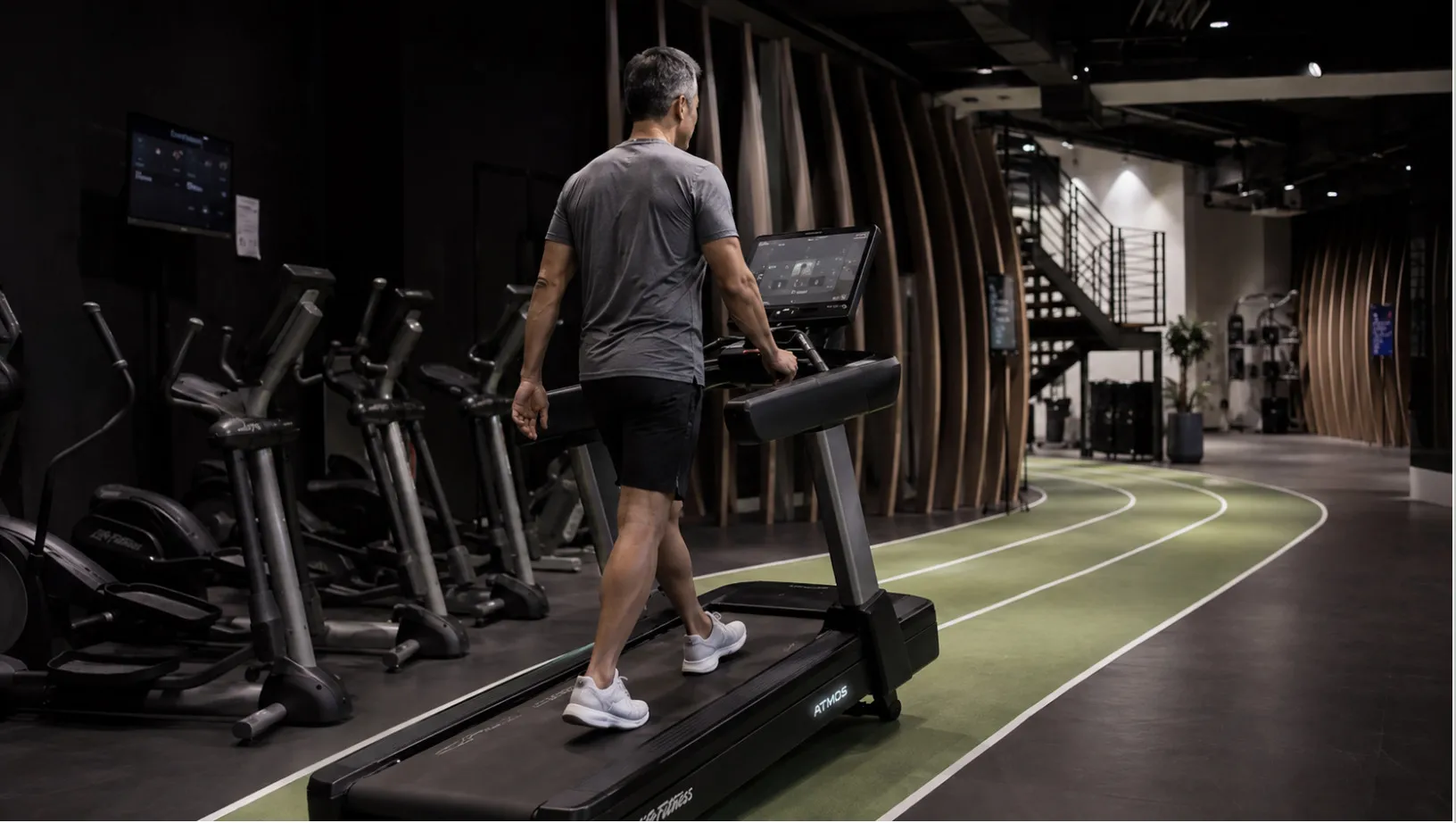
The Life Fitness ATMOS Treadmill, for example, is positioned for users who want a stable, comfortable walking or running experience and is offered by PrimaFit for home and shared fitness environments in Indonesia.
The treadmill itself, however, does not decide how hard you need to train. One of its advantages is that the same equipment can support very different sessions.
Which Is Better for Beginners?
For many beginners, walking is the easier place to start.
It allows you to build the habit of regular cardio while gradually learning how your body responds to longer duration and faster pace.
Once walking feels comfortable, progression does not have to mean immediately running for a long period.
You can increase the walking pace, introduce incline, extend the session or add short jogging intervals.
Progress should feel sustainable.
The objective is not to become a runner as quickly as possible. It is to develop a fitness routine you can continue.
Which Is Better for Everyday Fitness?
If your goal is simply to be more active every day, walking may be the more practical foundation because it is easy to repeat and adapt.
If you enjoy higher intensity, have less time or want more demanding cardio, running can be an efficient addition.
For many people, the best answer is not walking or running.
It is walking and running, used at different times for different purposes.
Where to start for cardio today?
Is walking every day enough exercise?
Walking can make an important contribution to weekly physical activity, particularly when performed at a brisk, moderate intensity. A balanced routine should also include muscle strengthening exercise.
Is running better than walking for cardio fitness?
Running is generally more vigorous, but walking can still provide meaningful cardiovascular activity. The better choice depends on your fitness level, goals and ability to train consistently.
Can you get fit by walking on a treadmill?
Yes. Brisk walking and incline walking can be used to build a regular cardio routine, and treadmill speed and incline can be adjusted as fitness improves.
Should beginners walk before they start running?
Walking can be a useful starting point because pace, duration and incline can be progressed gradually before adding jogging or running.
Where can I find walking and running treadmills in Indonesia?
PrimaFit offers walking and running treadmills in Indonesia for home and professional use, with different performance levels as well as installation and after sales support.
The Best Cardio Is the One You Keep Doing
Walking and running do not need to compete.
Walking gives you an accessible way to add more movement to everyday life. Running provides a higher intensity option when you want to challenge your cardiovascular fitness in less time.
The most useful routine may include both.
Start with the intensity that feels appropriate, progress gradually and choose equipment or environments that make exercise easier to repeat.
Because when it comes to everyday fitness, the most effective workout is often not the hardest one.
It is the one you are willing to do again.
AUTHOR: Marts E