Heart rate data is only useful when you can trust the measurement. This is why researchers often compare wearable heart rate sensors against electrocardiography (ECG), the established reference method for measuring cardiac activity.
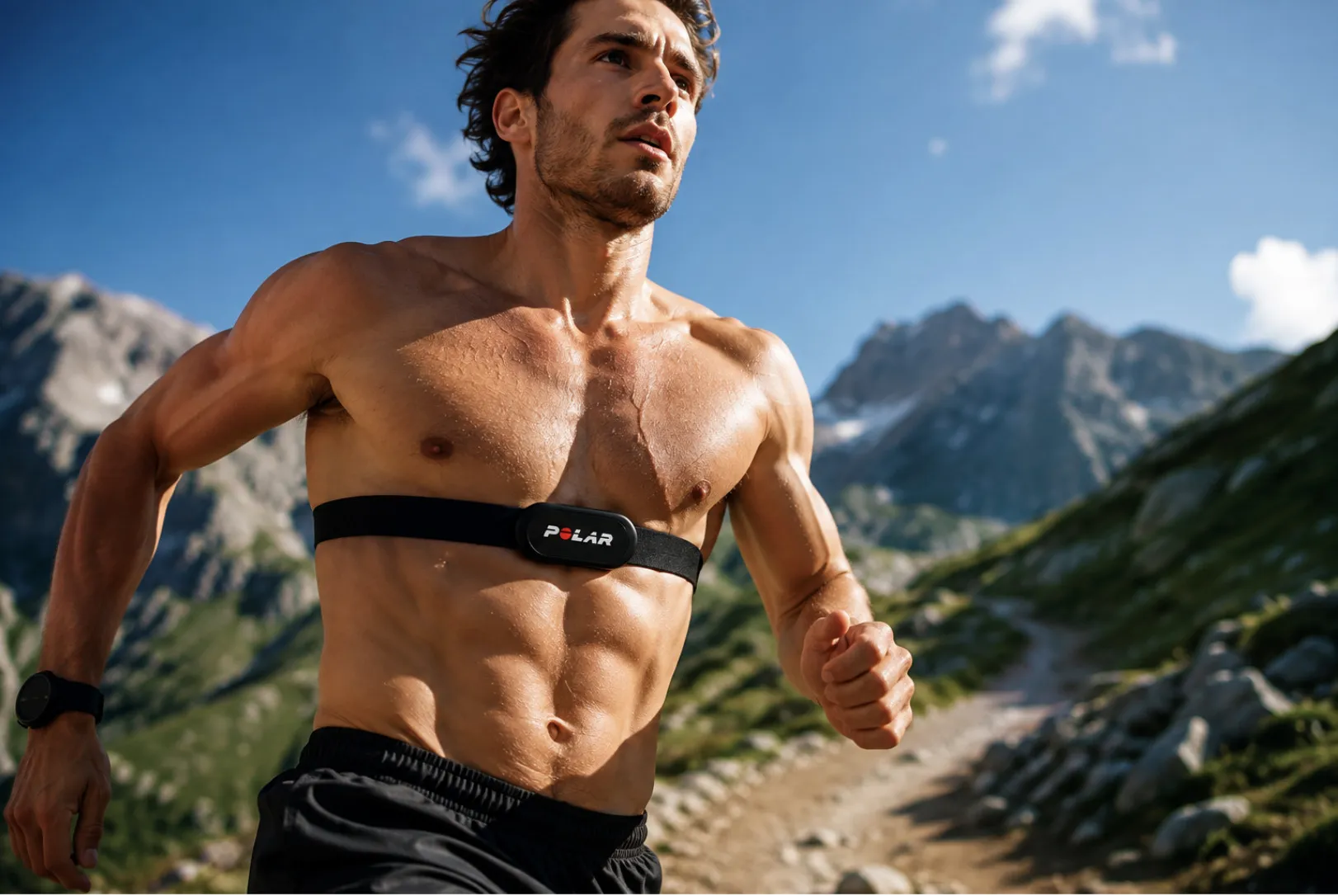
Among wearable heart rate sensors, the Polar H10 chest strap has been repeatedly validated against laboratory ECG systems. Recent research published in 2026 found a Pearson correlation of r>0.99 between Polar H10 measurements and a gold standard ECG system.
Why Is the Polar H10 Used in Research?
The Polar H10 measures heart rate using ECG based technology through sensors positioned around the chest. This differs from optical heart rate monitoring, which estimates heart rate using light based measurements.
Its accuracy has made the H10 useful in research involving heart rate, heart rate variability (HRV), exercise, physiology, neuroscience, and autonomic function.
A 2026 study found that the H10 showed excellent agreement with laboratory ECG for HRV measurements, with concordance correlation coefficients of ≥0.99 and mean absolute percentage error below 1% in the tested population.
Why Chest Strap Measurement Can Be Valuable
One reason researchers and performance professionals use chest straps is that heart rate measurement occurs close to the electrical activity of the heart. This can be particularly useful when researchers need continuous beat to beat information rather than occasional readings.
Heart rate variability research is one example. HRV examines changes in the time interval between heartbeats and can provide information relevant to exercise physiology and autonomic nervous system research. However, HRV can be affected by factors such as sleep, stress, illness, posture, breathing, and exercise load, so the context surrounding the measurement remains important.
The value of a device such as the H10 therefore comes not simply from producing a heart rate number, but from producing consistent physiological data that can be analyzed alongside other measurements.
Accuracy That Supports Better Training Data
Reliable heart rate data can help researchers and athletes better understand how the body responds to exercise and different physiological demands.
The H10 has also demonstrated strong signal quality during higher intensity activity. Earlier research found 99.4% RR interval signal quality during high intensity activities in the tested protocol.
This makes the Polar H10 particularly relevant when accurate, beat to beat heart rate information matters.
From Research to Everyday Training
The same principle used in research can also be useful in everyday exercise. Athletes can use heart rate data to understand training intensity, compare sessions, and observe how their body responds to different workloads.
For example, a runner might compare heart rate at the same running pace across several weeks. A lower heart rate at the same pace can sometimes indicate improved aerobic efficiency, although factors such as temperature, hydration, fatigue, sleep, and terrain must also be considered.
This illustrates an important point: heart rate data becomes more valuable when it is interpreted over time rather than viewed as an isolated number.
Who Can Benefit From Polar H10?
The H10 is not only relevant to laboratories.
It can be useful to:
Athletes and endurance runners
Coaches and personal trainers
Sports scientists
Fitness professionals
Researchers
Individuals focused on heart rate based training
For people who want to understand training intensity more precisely, a chest strap can provide a valuable source of physiological data.
Frequently Asked Questions
Is Polar H10 accurate?
Research has found very strong agreement between the H10 and laboratory ECG, including correlations above 0.99 in recent studies.
Is Polar H10 an ECG?
The H10 uses ECG (electrocardiogram) based measurement technology, but it is a wearable heart rate sensor and should not be considered a replacement for clinical ECG assessment.
Why do researchers use Polar H10?
Its strong validation against ECG, practical design, and ability to capture continuous heart rate data make it useful for research.
Can athletes use Polar H10?
Yes. It can provide detailed heart rate data for training and performance monitoring.
Who can benefit from Polar wearables?
Athletes and endurance runners, coaches and personal trainers, sports scientists, fitness professionals, researchers, elderly people, employees, and individuals focused on heart rate based training can all potentially benefit from wearable heart rate technology.
Conclusion
Polar H10 represents the science driven side of heart rate monitoring: accurate data, research validation, and practical wearable technology.
For athletes, coaches, researchers, and fitness enthusiasts who want to understand heart rate data beyond basic smartwatch metrics, the H10 offers a research backed approach to monitoring training.
Explore Polar solutions through PrimaFit Indonesia and discover heart rate technology built around precision and physiological data.
Author: Dylan Bartlett