Training is only one part of feeling and performing your best. What happens between workouts matters too.
This is one reason contrast therapy has become increasingly visible in fitness and wellness routines. The idea is simple: use periods of heat and cold as part of a structured recovery experience.
Traditionally, contrast therapy often refers to alternating hot and cold water. In modern recovery settings, the same principle is frequently applied by moving between a sauna and cold plunge.
Cold and heat create very different experiences for the body. Used thoughtfully, they can offer a way to transition from hard training into recovery while also creating a routine that encourages you to slow down and pay attention to how your body feels.
What Is Contrast Therapy?
Contrast therapy involves alternating exposure to warmer and colder temperatures.
A modern routine might involve spending time in a sauna, followed by a short cold plunge, with the process repeated depending on the person's experience and preferences.
Research into contrast water therapy and cold water immersion has explored their role in exercise recovery. Reviews suggest that cold water immersion can help reduce muscle soreness and perceived fatigue after demanding exercise, while contrast water therapy may support certain recovery markers.
However, contrast therapy should not be viewed as a shortcut that replaces sleep, nutrition or proper rest.
It works best as one part of a broader recovery routine.
Why Combine Heat and Cold?
Heat and cold feel almost opposite, which is exactly why many people find the combination appealing.
A sauna creates a warm environment that raises skin and body temperature and changes cardiovascular activity. Cold immersion creates a very different physiological response, including rapid changes in breathing, heart rate and blood pressure when the body first enters cold water.
The transition between the two can also create a clear mental separation between training and recovery.
For some people, that ritual matters just as much as the equipment itself.
Rather than finishing a workout and immediately returning to a busy day, a recovery routine provides a deliberate period to reset.
What Does Cold Therapy Add to Recovery?
Cold water immersion has become popular among athletes, runners and recreational gym users.
There is also a growing body of research behind its use.
Systematic reviews have found that cold water immersion can help reduce muscle soreness and perceived fatigue after high intensity exercise, particularly during the period after a demanding training session.
That does not mean colder is always better or that everyone needs to plunge after every workout.
In fact, frequent cold water immersion immediately after resistance training may not always be ideal when maximizing long term strength and muscle growth is the primary goal. Research has suggested that regular post strength training cold immersion may reduce some of the adaptations involved in muscle hypertrophy.
This is an important reminder that recovery should match the goal.
A runner recovering from a demanding event may use cold differently from someone focused primarily on building muscle.
Where Does Sauna Fit In?
Heat offers a very different recovery experience.
For many people, time in a sauna is associated with warmth, relaxation and a chance to slow down after physical activity.
Research shows that sauna exposure creates measurable cardiovascular responses, including changes in blood pressure and arterial function. At the same time, scientific evidence specifically showing that post exercise heat improves acute athletic recovery is still developing.
That distinction is important.
You do not need to treat every recovery tool as a performance hack.
Sometimes the value of a sauna is simply that it helps create a comfortable, repeatable recovery ritual that fits naturally into your routine.
Why Are More People Building Recovery Routines?
Fitness used to be discussed mainly in terms of what happened during the workout.
Today, people increasingly pay attention to the hours between sessions.
Sleep, hydration, nutrition, mobility and stress management all influence how ready you feel to train again. Recovery tools such as cold plunges and saunas are becoming another part of that conversation.
The attraction is also practical.
Contrast therapy gives recovery a clear beginning and end. Instead of vaguely deciding that you “should recover more,” you create a routine that you can actually follow.
That might be after a demanding workout, on a lighter training day or simply when you want time to slow down.
What Does a Contrast Therapy Setup Look Like?
A contrast therapy setup does not need to be complicated.
At its simplest, it combines access to controlled heat and cold.
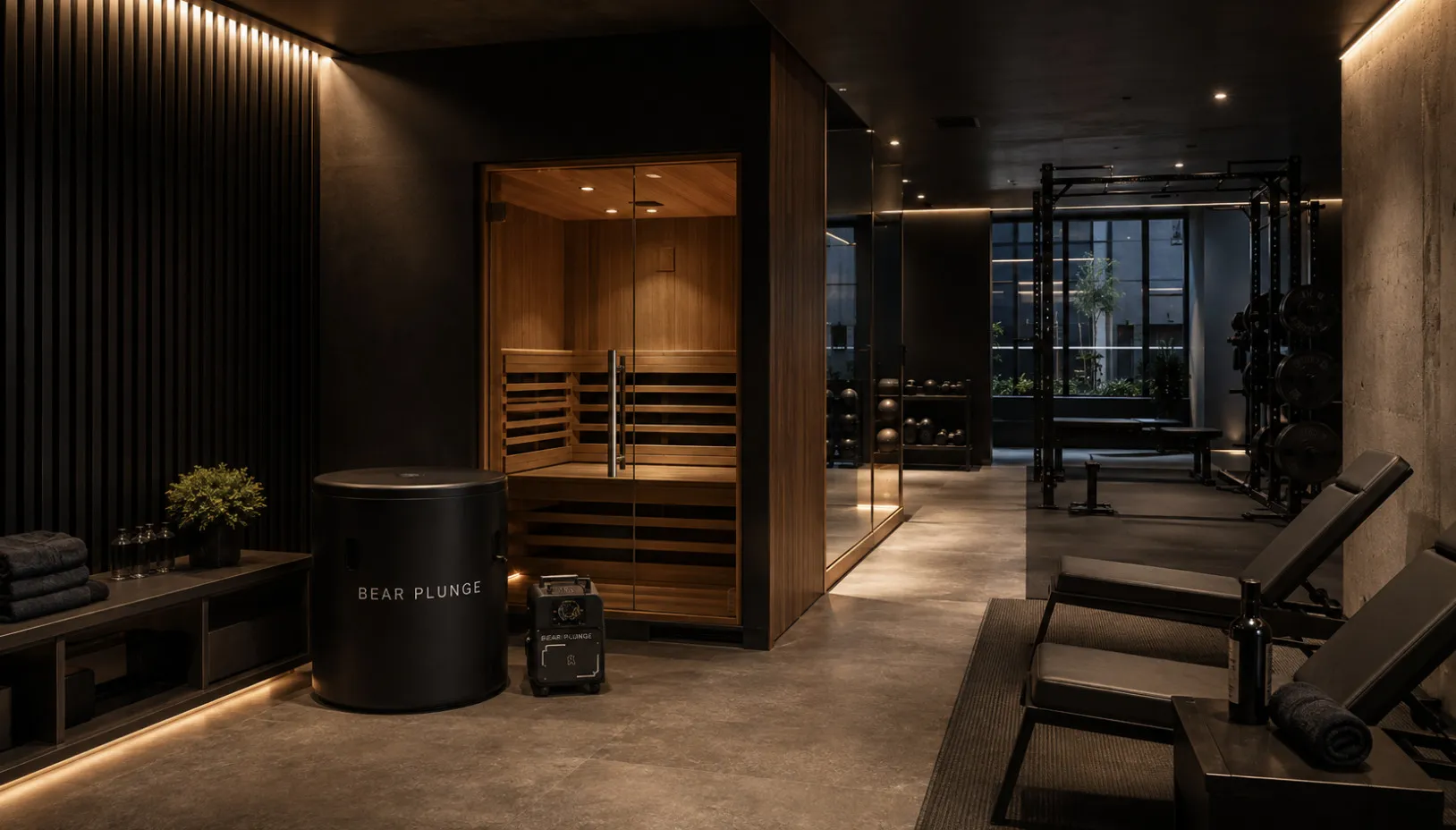
For cold therapy, PrimaFit offers Bear Plunge cold plunge systems in Indonesia, including tub and chiller configurations designed to maintain cold water without requiring ice to be continually added.
For heat therapy, PrimaFit also carries SaunaWellness infrared sauna systems by Wellness USA, with different configurations available for private and shared use.
Together, a sauna and cold plunge can create a simple contrast setup. They can also be used independently depending on the day, training goal and personal preference.
The important part is not owning the largest recovery space. It is creating a setup you will actually use consistently.
Cold Plunge or Sauna: Do You Need Both?
Not necessarily.
If your priority is post exercise cold water recovery, a cold plunge may be the more relevant starting point.
If you enjoy heat and want to create a calmer recovery ritual, a sauna may fit your routine better.
Contrast therapy becomes useful when you enjoy both experiences and want to combine them intentionally.
There is no requirement for every recovery session to look exactly the same.
Your routine may change depending on how hard you trained, how you feel and what your body needs that day.
Is Contrast Therapy for Everyone?
No recovery method is appropriate for everyone.
Sudden cold water immersion can rapidly increase breathing, heart rate and blood pressure, placing additional stress on the cardiovascular system. The American Heart Association specifically advises caution for people with a history of heart conditions.
Extreme heat also places demands on the cardiovascular system.
If you have cardiovascular disease, blood pressure concerns or another medical condition that could affect your response to extreme temperatures, speak with a qualified healthcare professional before introducing sauna or cold immersion into your routine.
When starting cold exposure, gradual progression is also more sensible than immediately trying to tolerate the coldest possible temperature.
Recovery is not a competition.
How Should Contrast Therapy Fit Into a Fitness Routine?
Think of contrast therapy as supporting the basics rather than replacing them.
A strong recovery routine still begins with:
Adequate sleep
Balanced nutrition
Hydration
Appropriate rest between demanding sessions
Mobility and light movement when suitable
Contrast therapy can then become an additional tool.
Some people may use it after particularly demanding sessions. Others may prefer it on recovery days or as part of a wider wellness routine.
The best approach is the one that fits your training rather than forcing your training to fit the recovery trend.
Frequently Asked Questions
What is contrast therapy?
Contrast therapy involves alternating exposure to heat and cold. Modern recovery routines often combine a sauna with a cold plunge.
Does cold plunging help muscle recovery?
Research suggests cold water immersion can help reduce muscle soreness and perceived fatigue after demanding exercise.
Is sauna good after exercise?
Many people use sauna after exercise for warmth and relaxation. Sauna has measurable physiological effects, although evidence specifically for improving immediate post exercise performance recovery is still developing.
Do you need a sauna and cold plunge for contrast therapy?
A combination of heat and cold creates the contrast experience, but both can also be used separately depending on your recovery goals and preferences.
Where can I find contrast therapy equipment in Indonesia?
PrimaFit provides cold plunge and infrared sauna solutions in Indonesia, including Bear Plunge systems and SaunaWellness infrared saunas, together with installation and ongoing support.
Recovery Should Help You Come Back Ready
Contrast therapy is not about proving how long you can stay in the cold or how much heat you can tolerate.
Its real value is much simpler.
It can create a structured moment between training sessions a chance to recover, reset and pay attention to how your body feels.
Cold water immersion has useful evidence behind it for certain aspects of post exercise recovery, while sauna provides a different heat based experience that many people enjoy as part of their wellness routine.
Used together, they create contrast.
Used thoughtfully, they can become part of something more important: a recovery routine you can consistently return to.
AUTHOR: Marts Eglitis