Starting the gym for the first time can feel intimidating. Many beginners wonder where to start, which equipment to use, or worry about looking inexperienced around other gym members.
The good news is that everyone who regularly works out today was once a beginner. By understanding the basics of fitness and following the right approach, you can build a workout routine that is safe, effective, and enjoyable.
In this guide, we'll cover how to start going to the gym, beginner-friendly equipment, common mistakes to avoid, and a simple workout plan to help you begin your fitness journey with confidence.
Why Is the Gym a Great Place for Beginners?
A gym offers a wide range of equipment and facilities designed to help improve your overall fitness. By combining cardiovascular exercise and strength training, regular gym workouts can help you:
Improve heart and lung health
Burn calories and support weight loss
Build muscle mass and increase strength
Improve posture
Reduce stress and boost your mood
Enhance sleep quality
Whether your goal is to lose weight, build muscle, improve your fitness, or simply live a healthier lifestyle, the gym is an excellent place to start.
What Should You Do on Your First Gym Visit?
1. Set Your Fitness Goals
Before you begin working out, identify your primary fitness goal.
Some common goals include:
Losing weight
Building muscle
Improving overall fitness
Maintaining good health
Enhancing athletic performance
Having a clear objective will help you choose the right workout plan and make it easier to track your progress.
2. Warm Up Properly
Many beginners make the mistake of jumping straight into lifting weights without warming up.
A proper warm-up helps:
Increase blood flow to your muscles
Prepare your body for physical activity
Reduce the risk of injury
Spend 5–10 minutes warming up on a treadmill, stationary bike, or by performing dynamic stretching exercises.
3. Start with Light Weights
One of the most common beginner mistakes is lifting weights that are too heavy in hopes of achieving faster results.
Instead, choose a weight that allows you to perform 10–15 repetitions with proper form. At this stage, learning the correct movement is much more important than lifting heavy.
4. Learn Proper Exercise Technique
Good technique is more important than the amount of weight you lift.
If possible, ask a personal trainer or gym instructor to teach you fundamental exercises such as:
Squats
Push-ups
Lat Pulldowns
Seated Rows
Dumbbell Presses
Mastering these movements early will help you train more safely and effectively.
Beginner-Friendly Gym Equipment
You don't need to use every machine during your first visit. Instead, focus on equipment that is easy to learn and safe for beginners.
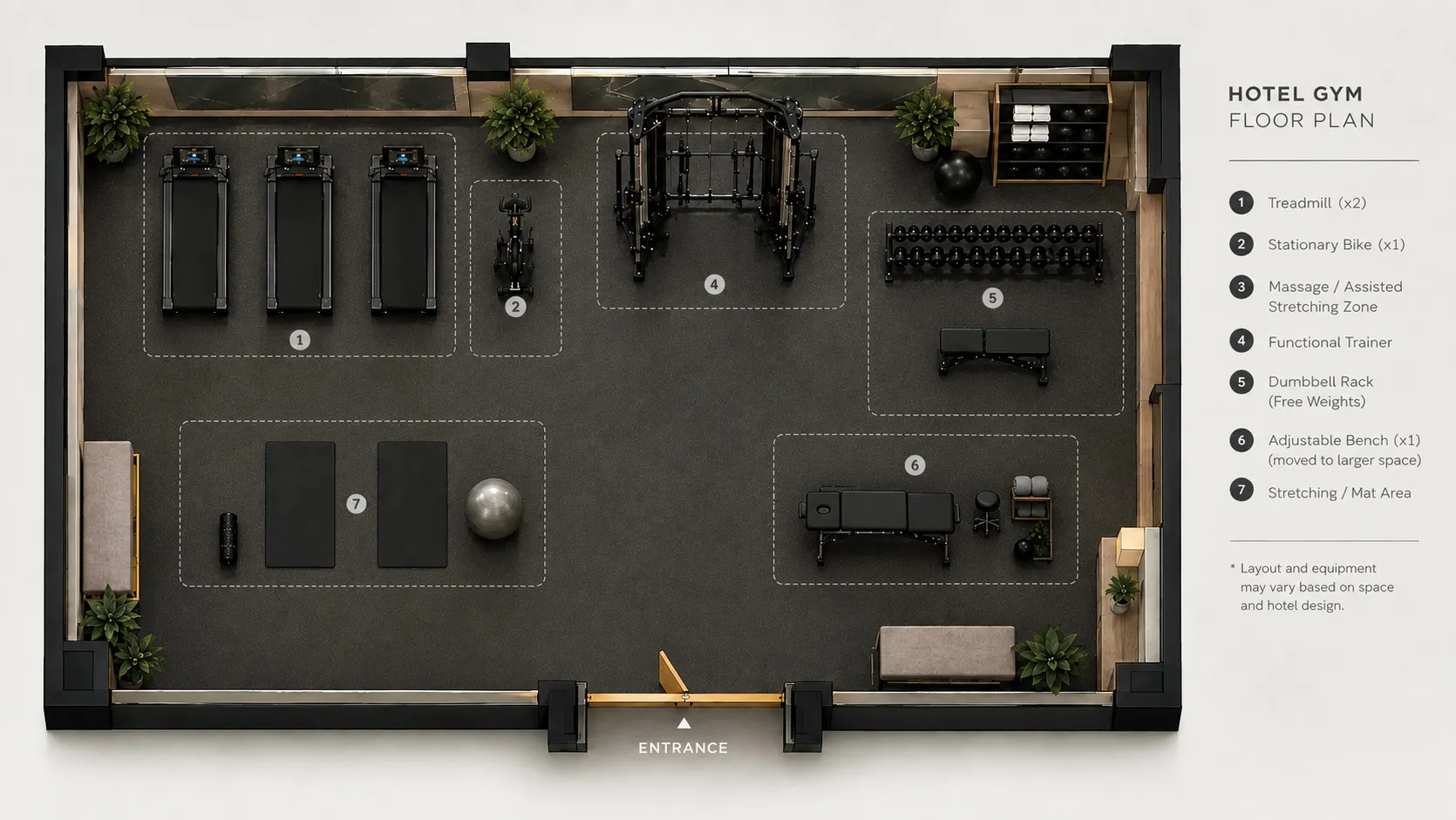
1. Treadmill
The treadmill is one of the most common cardio machines found in gyms.
Benefits:
Burns calories
Improves cardiovascular health
Excellent for warming up
2. Stationary Bike
A stationary bike provides an effective cardio workout while placing less stress on the joints than running.
Best for:
Beginners
People with knee discomfort
Weight loss programs
3. Lat Pulldown Machine
This machine targets the upper back and arm muscles.
Benefits:
Strengthens the back
Improves posture
Easy to use for beginners
4. Chest Press Machine
The chest press machine offers a safer alternative to the traditional barbell bench press.
Primary muscles worked:
Chest (Pectorals)
Front shoulders
Triceps
5. Leg Press Machine
The leg press is an excellent machine for building lower-body strength without requiring advanced squat technique.
Primary muscles worked:
Quadriceps
Hamstrings
Glutes
6. Dumbbells
Dumbbells are among the most versatile pieces of gym equipment and can be used for a wide variety of exercises.
Some beginner-friendly movements include:
Dumbbell Curls
Shoulder Presses
Goblet Squats
Dumbbell Rows
Common Mistakes Beginners Should Avoid
1. Working Out Without a Plan
Going to the gym without a structured workout often leads to ineffective training.
Before your workout, decide:
Which exercises you'll perform
How many sets and repetitions you'll complete
How long your workout will last
2. Lifting Weights That Are Too Heavy
Using weights beyond your current ability can result in:
Injury
Poor exercise technique
Slower long-term progress
3. Skipping Warm-Up and Cool-Down
Many people underestimate the importance of warming up and cooling down. However, both are essential for improving performance and supporting recovery after exercise.
4. Training Too Frequently
Your body needs time to recover and adapt to exercise.
For most beginners, training 3–4 times per week provides enough stimulus while allowing adequate recovery.
5. Comparing Yourself to Others
Everyone starts from a different fitness level.
Instead of comparing yourself with others, focus on your own progress and celebrate small improvements over time.
Conclusion
Starting your fitness journey doesn't have to be complicated. Focus on setting clear goals, learning proper exercise techniques, using beginner-friendly equipment, and avoiding common mistakes such as lifting weights that are too heavy or training without a plan.
Remember, progress doesn't happen overnight. With consistency, patience, and the right approach, going to the gym can become one of the best long-term investments in your health, strength, and overall quality of life.
If you've been thinking about starting your fitness journey, there's no better time than today. Take that first step and begin building a healthier, stronger version of yourself.